
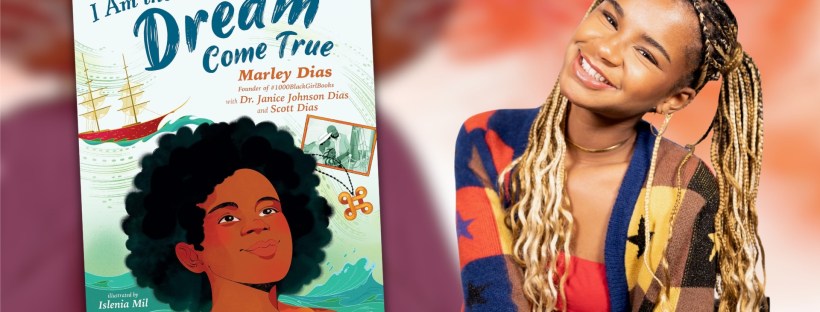
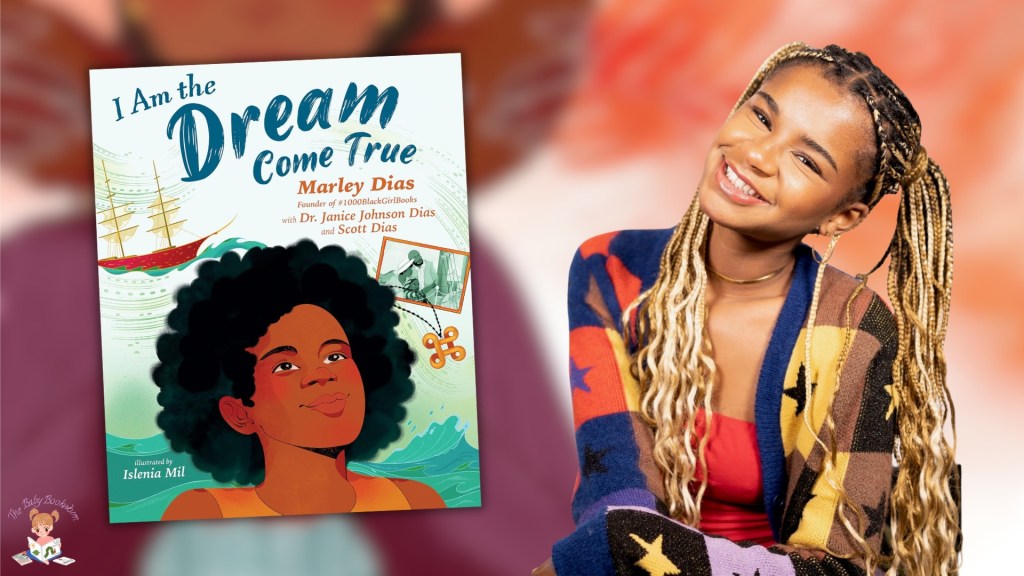
It’s a fascinating concept that every human being living in the world today is the result of a single, 200,000-year-long line of their ancestors. Each of us carries a lineage of not only DNA and physical characteristics, but also of culture, tradition, and memories. As such, our existence often represents the hopes and dreams that our forebearers carried for their children—and children’s children—through hardships, triumphs, and everything in between.
In Marley Dias’s debut picture book, the author and activist explores the pride that can be found in being a living manifestation of ancestral dreams. Co-authored with her parents, I Am the Dream Come True touches on her family’s history and hopes while encouraging readers to embrace their own heritage of dreams. We recently had the chance to talk with Marley about her newest book, her extensive work in advocacy, and how family has helped to shape her own journey.
Welcome to The Baby Bookworm, Marley! What was the spark of inspiration that led you to bring I Am the Dream Come True to the page?

MD: The spark was really my family. I grew up watching my parents carry so much history: in the way they talked about where they came from, what they sacrificed, what they hoped for. I wanted to understand that more deeply, and writing has always been how I do that.
This book felt like the truest way to honor what their journey made possible for me, and to name it clearly so other kids could see themselves in it too.
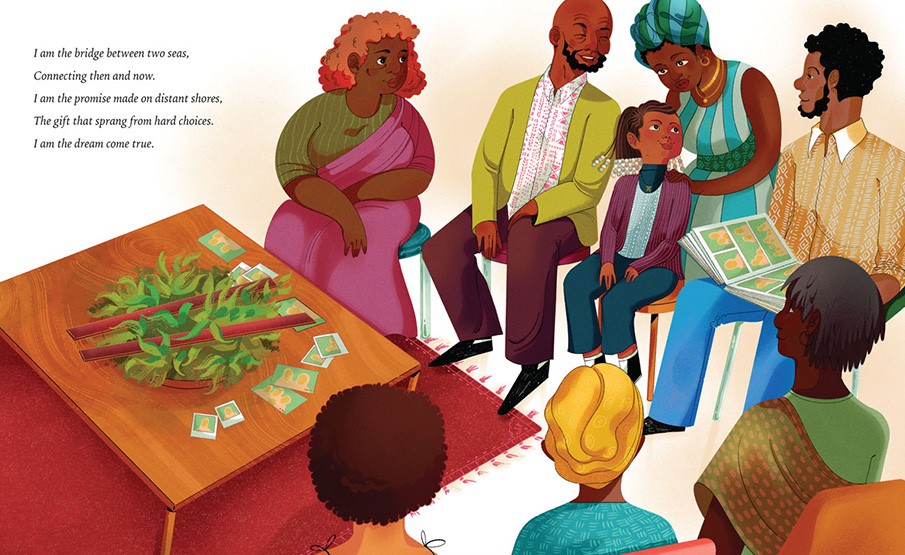
While I Am the Dream Come True is rooted deeply in your own family’s stories, the language you use is more abstract and could apply to any reader and their family history of dreaming. What made you approach the narrative as part-autobiographical, part-universal?
MD: The specificity of my family’s story is what makes it real, but specificity is also what makes something universal. When you tell the truth about one family, clearly and honestly, readers find their own families inside it.
I wanted kids from immigrant households, from multi-generational households, from all kinds of households, to be able to hold this book and feel like it was theirs. The abstract language wasn’t a way of hiding the personal story. It was a way of opening the door wider.
Your parents, Dr. Janice Johnson Dias and Scott Dias, co-authored this title with you. Can you describe what that creative process looked like? Were there any unexpected challenges or joys in co-creating with family?
MD: It was genuinely one of the most meaningful creative experiences I’ve had. My parents are not just my family; they’re my collaborators and my first intellectual community. There were moments of real negotiation, because we each carry the same story differently.
My mom and I have worked together publicly before, so there’s a shorthand there. My dad brings a different kind of groundedness. The unexpected joy was realizing how much I didn’t know about their inner lives, things they had never said out loud until this book asked them to.
Was it especially important to you to explore your family’s history of voluntary migration, given how much of Black American history focuses on forced displacement?
MD: Yes, deeply. The dominant narrative about Black people and America centers arrival through violence, which is true and important and must always be told. But my family’s story is one of choice, of people who looked at the world and decided to move toward something.

Both truths exist. Both deserve space. I wanted my family’s particular thread of that history to be visible, because erasure happens even within communities when certain stories get treated as the only story.
Readers unfamiliar with your accolades may be surprised to hear that you’ve been an advocate for and ambassador of children’s literature since you were 10 years old! Can you briefly summarize what led to the formation of #1000BlackGirlBooks?
MD: I was 10, and I was frustrated. I noticed I could not find books where the main character looked like me, a Black girl, unless the story was about suffering or struggle. I wanted adventure, I wanted magic, I wanted curiosity.

I asked my mom what I could do about it, and she told me to stop complaining and start acting. So I launched a campaign to collect 1,000 books featuring Black girl protagonists and donate them to a school in Jamaica. That was the beginning.
In the ten years since #1000BlackGirlBooks launched, it has inspired fundraisers, donation drives, and a Netflix show that you co-produced, all while highlighting over 13,000 books with Black female protagonists. What was it like growing up alongside the campaign you created, and what are some of the best lessons you learned from that experience?
MD: It was strange and clarifying in equal measure. I grew up in public in a lot of ways because of this work, which means I had to figure out who I was while also showing up as a version of myself for audiences and institutions.
The best lesson I learned is that the work has to stay connected to the actual kids. When I stayed close to readers, to their letters, their questions, their hunger for stories, the work stayed honest. The moment it becomes about the accolades, you lose the thread.
Was there ever a specific moment or meaningful interaction during the campaign that made you think, “This is exactly why I started this”?
MD: There was a young girl who reached out after seeing Bookmarks who told me she had started her own book collection for her school because she watched the show. She was seven. She had already picked out 30 books.
That’s the moment. Not a stage or an award, but another child deciding she could do something about what she saw missing in the world.
You’re an author, literacy ambassador, diversity advocate, activist, producer, and recent Harvard graduate, to name only a few. What project is next on the horizon for you?
MD: I’m writing for my Substack, Third Space, which has become a real home for my longer thinking about culture, community, and what young people need right now.
I’m also relaxing into the early ideation stage for a third book, which feels good after the intensity of a launch. And I’m raising funds for the St. James Parish Library in Jamaica through the GrassROOTS Community Foundation, which connects back to the roots of #1000BlackGirlBooks in a way that feels full circle.
The common thread in everything is asking what young people actually need to feel like they belong in the future.
I always love to ask creators about the books that inspired them as children. What are the books or series that have a special place in your heart to this day?
MD: Toni Morrison’s work lives in me permanently. The Bluest Eye cracked something open when I first read it. Octavia Butler’s Kindred changed how I understood time, history, and the body.
As a younger kid, I was obsessed with Jacqueline Woodson. Brown Girl Dreaming showed me that poetry could tell the kind of story I thought only prose could hold.
Lastly, in honor of I Am the Dream Come True, what is your favorite way to spend a day with family?
MD: Good food, no agenda, and everybody talking at the same time. In my family, that’s love. Someone is always making a point, someone is laughing too loud, and there’s usually music on in the background. Those days are when I feel most like myself.
About Marley Dias
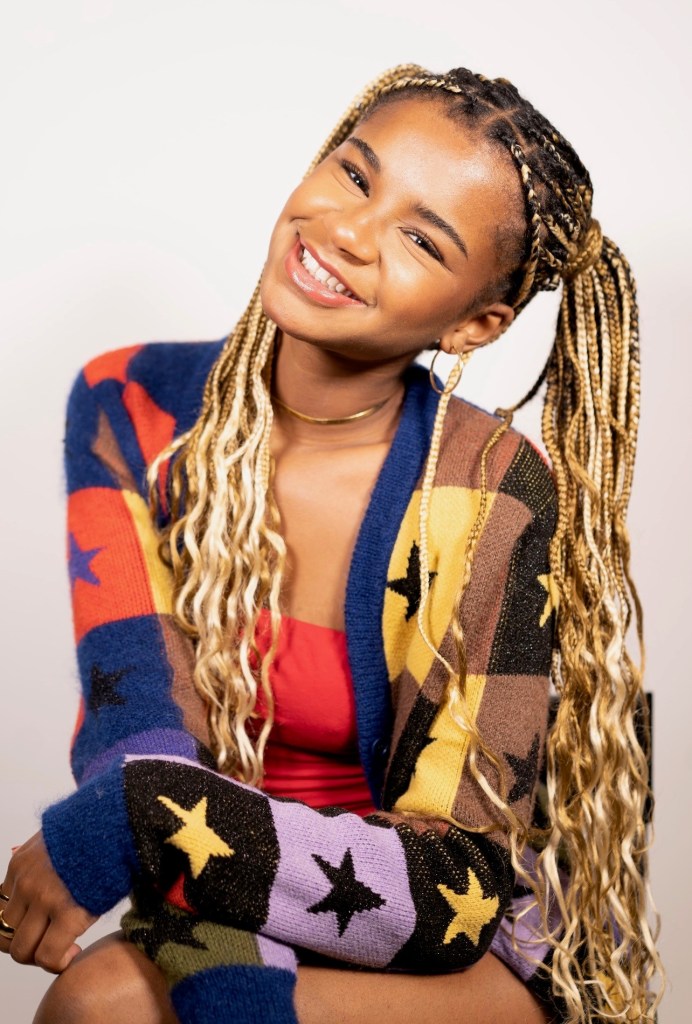
Marley Dias made headlines as a sixth grader when she started the #1000BlackGirlBooks campaign to collect children’s books featuring Black protagonists. Her initiative led to national media attention and served as a springboard to Marley’s global literacy advocacy work and social activism.
Her book Marley Dias Gets It Done: And So Can You! was hailed in a Kirkus Reviews starred review as “an irresistible call to action for people of all ages.” Marley is currently the Ambassador of the National Educational Association (NEA) Read Across America and serves as Host and Executive Producer of Netflix’s Bookmarks: Celebrating Black Voices.
Marley is a graduate of Harvard University, where she earned a Bachelor of Arts degree in Sociology.
About Dr. Janice Johnson Dias & Scott Dias
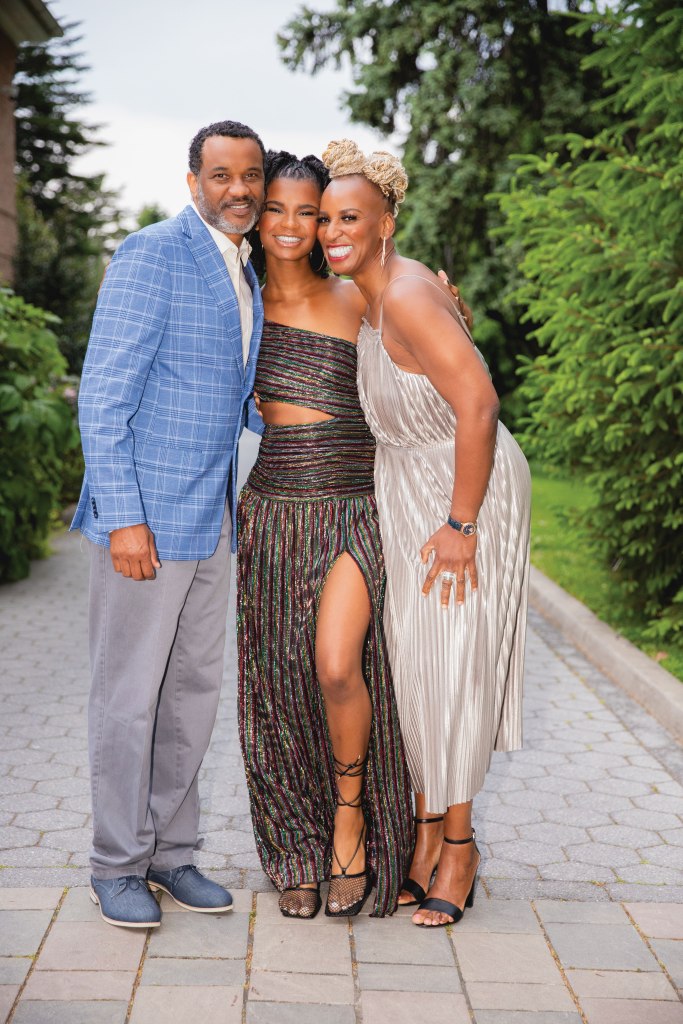
Dr. Janice Johnson Dias is the mother of Marley Dias and the founder and leader of GrassROOTS Community Foundation (GCF), where she trains girls to become trailblazers.
Additionally, she is a renowned sociologist who has devoted her life to bridging the gap among research, theory, and practices. Dr. Johnson Dias is the author of Parent Like it Matters: How to Raise Joyful Change-Making Girls. To learn more, visit TheDrJanice.com.
Scott Dias is the father of Marley Dias, a real estate analytical geographer, and one of the key inspirations behind I Am the Dream Come True. The Dias family lives in New Jersey.
A heartfelt thank you to Marley for taking the time to talk about her book with us! Visit Marley at her website, MarleyDias.com, and her Substack, Third Space! Lastly, be sure to check out I Am the Dream Come True, available on bookshelves now!

