
Despite being the largest and most diverse minority group—constituting over a fourth of the U.S. population—disabled people are still largely misunderstood by the nondisabled. And while these misconceptions can often manifest as exclusion or discrimination, they can also often take on more subtle forms, such as underestimation, tokenism, and othering. These sorts of misperceptions not only affect the disabled, but their loved ones as well.
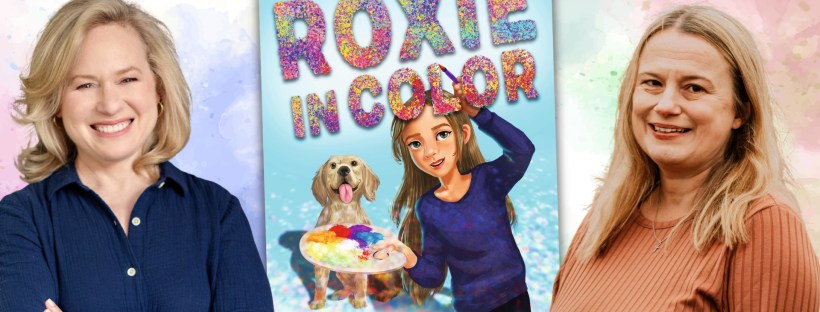
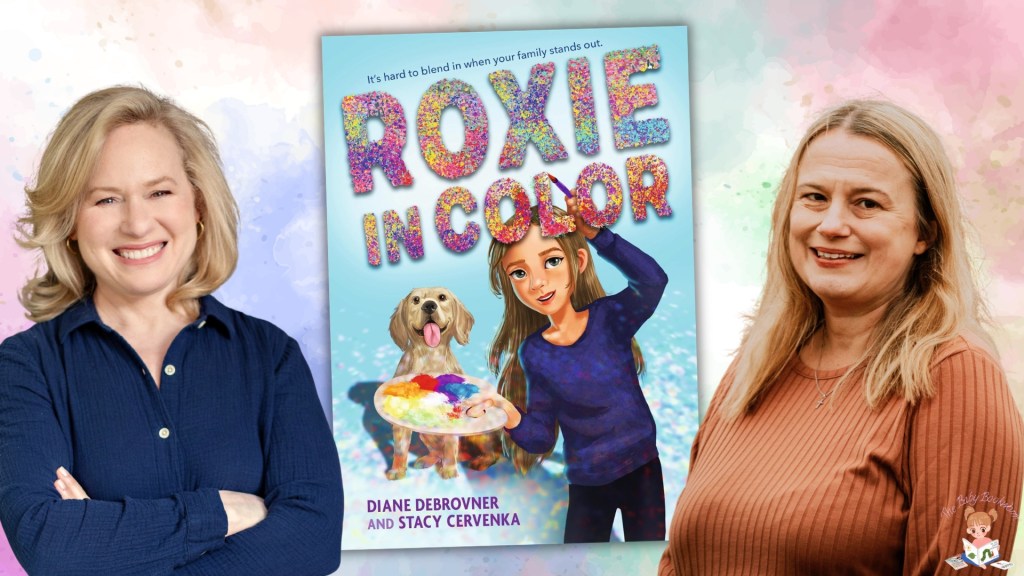
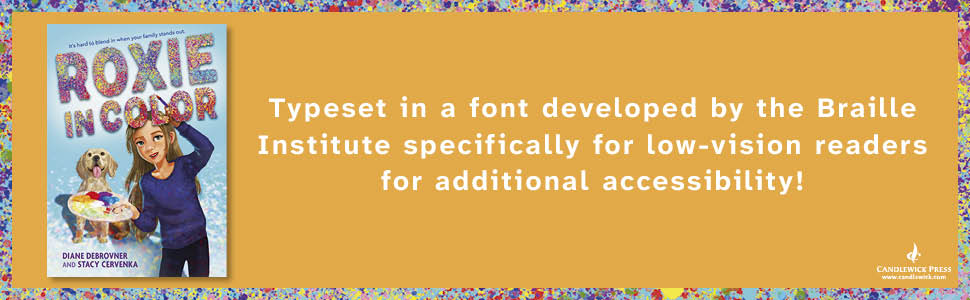
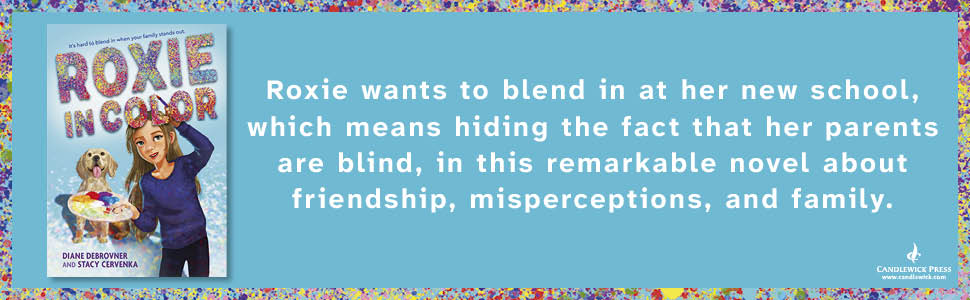
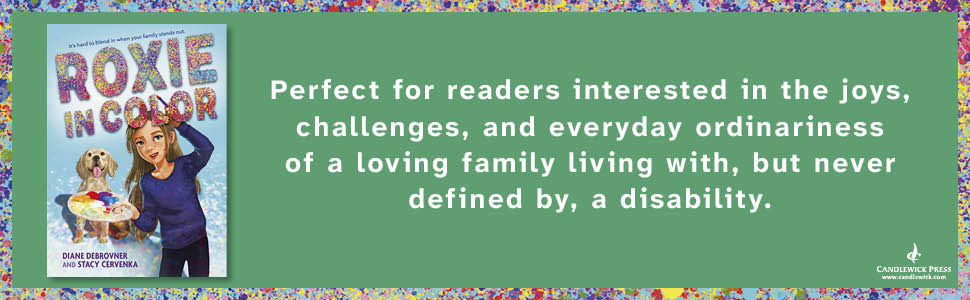
In Roxie in Color, the middle grade novel by coauthors Stacy Cervenka and Diane Debrovner, these themes are explored through the experiences of the titular protagonist, the daughter of blind parents who believes that the way the world views her family makes the typical hurdles of being a preteen all the more challenging. We recently had a chance to talk with Diane and Stacy to learn more about their collaborative process, how real life influenced art, and what they hope young readers take away from Roxie’s story.
Welcome to The Baby Bookworm, Diane and Stacy! For readers unfamiliar with Roxie in Color, could you introduce Roxie and what is going on in her life at the start of the novel?
SC: Roxie Glass is a twelve-year-old girl who has just moved with her family to a new town on Long Island and is starting over at a new middle school.

At the beginning of the novel, Roxie is cautious and highly observant. She’s learned from past experience that standing out can carry social costs, and she’s determined to avoid that this time around. Roxie experienced bullying and rejection by her classmates at her previous school; her shy, sensitive temperament made dealing with her peers’ reactions to her parents’ blindness particularly difficult.
As a result, she enters her new school believing that blending in means minimizing anything that might draw attention to her, including her clothes, her barrettes, how she introduces herself, how she wears her backpack, and, of course, the fact that her parents are blind. The story begins with Roxie trying to manage other people’s reactions to her before they happen.
DD: Roxie is a talented artist who loves painting pictures on the walls of her bedroom. Many of them are of her mom’s guide dog, Nash. Painting is an outlet for the feelings and worries Roxie has been keeping inside, and art and color also shape the way she sees the world.
She has a special relationship with Nash—who is really her closest friend and confidante at the start of the novel—and talks to him about her life and feelings. Despite her difficult experiences at her old school, she longs to fit in and have close friends at her new school, and she’s determined to be more outgoing now rather than trying to be invisible.
She is also trying to decide whether she wants to take the genetic test that will show whether she has inherited the gene for retinitis pigmentosa, the condition that caused her mother’s blindness. Even if she does have the gene, it could take many years for her to start losing her vision. Is it better to know or not to know?
I understand that Roxie’s story was partially inspired by an article for Parents magazine that the two of you collaborated on. Can you explain the process of how this spark became a full-fledged, co-written novel?
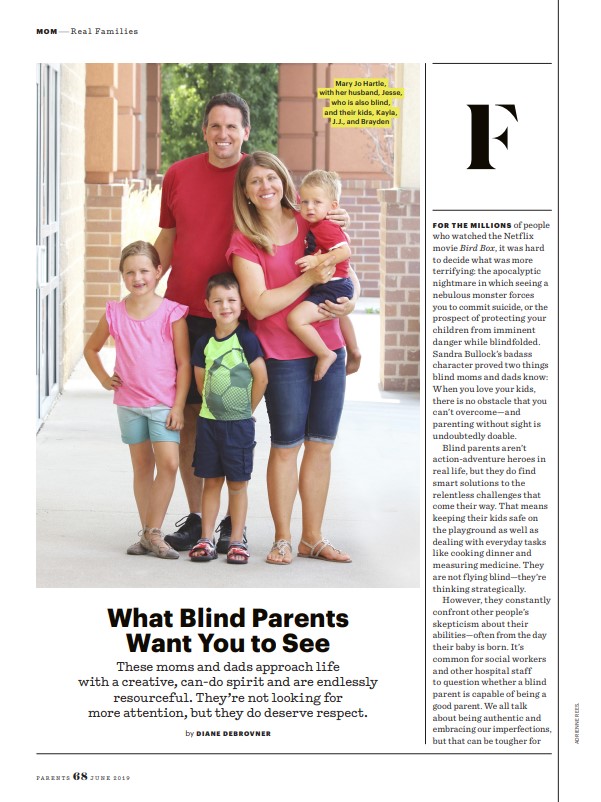
SC: In 2018, Diane was the Deputy Editor of Parents Magazine and wrote a cover story called “What Blind Parents Want You To See.” In the course of her extensive research for the article, she interviewed about a dozen blind parents, including my husband Greg and me.
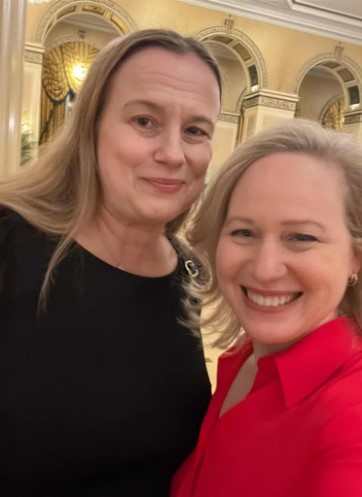
We kept in touch; Diane knew I was chairing the Blind Parents Group of the National Federation of the Blind and had done some writing about blind parenting for US News and World Report and some other outlets. When she began developing a middle-grade novel, inspired by her experiences reporting about and getting to know blind parents, she asked me if I would be willing to co-author it with her.
She developed an early draft of the novel and, throughout our partnership, we added and removed chapters, developed new characters and took out a few previous ones, and deepened the characterization of her family. We often divided the work up, each wrote different parts, and then ensured that our writing style and tone were the same throughout.
It was particularly important to me that the book reflects that Roxie and Theo are by no means the only kids in the world being raised by blind parents. Adults with disabilities have kids at rates only slightly below the national average. I wanted readers to see that there is a whole, close-knit blind community that their family belongs to.
When blind friends have read early drafts, this is almost always the aspect they respond to most strongly. They appreciate that readers will see that not every child of blind parents thinks about it the same way that Roxie does.
DD: While I was working on the magazine article, I was also reading a lot of middle grade novels—I edited our children’s book column as well as articles about child development. I started wondering what everyday life might feel like from the perspective of a sighted 12-year-old with blind parents. And what would it be like for a kid to experience some of the misperceptions and prejudices that the moms and dads I interviewed told me about?
There were so many possibilities for interesting, relatable situations in a middle grade novel. I started writing the book from the perspective of Roxie, who is sighted like I am, and her mother’s guide dog. But then I decided I couldn’t tell the story by myself and was thrilled when Stacy agreed to be my co-author.
While Roxie loves her family, she is often pigeonholed as “the girl with blind parents” and not really allowed a social identity outside of that. Is this something that children being raised by disabled parents often have to contend with?
SC: No, not generally. Just like kids from any family with a marginalized identity (due to disability, immigration status, religion, socioeconomic status, or family structure), every kid has a different personality and way of perceiving and reacting to the stigmatization their family faces.
One of the things that’s been interesting since sharing Roxie in Color with early readers is hearing from kids who actually have blind parents. Without exception, they’ve said that they didn’t feel this way or, if they were known as “the kid with the blind parent,” it was neutral or even positive.
For example, my friend’s son Max loved when his mom volunteered in his classroom and said, “I was generally very open about my mom being blind and felt comfortable bringing it up when it was relevant to what I was sharing. I always either felt neutral or neutral-positive about it.” My own kids loved it when I was on the PTO at their school because it meant they saw me at school more often.
My kids have always been particularly proud to show off their dad… as they should be! My husband once got stuck at work late and missed my daughter’s gymnastics camp performance. She was in tears and refused to go on. (Keep in mind, my husband is totally blind, and it was a gymnastics performance, but Josie just wanted him there so much to meet her camp friends and witness her performance.)
Every kid who has blind parents who read the book wanted readers to understand that the story is about one girl who has her own unique past experiences. It reflects her specific history, particularly the bullying she faced, her sensitivity, and the way earlier peer reactions shaped her fears about standing out.
It’s also important to note that we don’t depict her parents as being perfect. In fact, Penny openly reflects on wishing she had talked more with Roxie about the secondhand ableism she encountered, something many parents of blind children told me they did address early and intentionally. Several young readers with blind parents said their parents “did a good job” ensuring they understood their blindness and the negative misconceptions that often come with it.
So while Roxie feels boxed in at the start of the story, that feeling grows out of her personal experiences and internalized fears, not because being raised by blind parents typically limits a child’s identity or social world.
DD: Fortunately, most kids are not like the hurtful ones at Roxie’s old school. And after a few particularly difficult incidents, Roxie admits that she stopped trying to make friends there. That’s why she’s excited to have the opportunity to start fresh at a new school where no one knows her.
The book also tackles a lot of the misperceptions addressed by the Parents article, namely, the notion that blind caregivers do not—or cannot—take care of their children to the same standard as sighted caregivers. Why do you think this misconception is so important to address with readers of all ages?
SC: Misconceptions about people with disabilities often have significant consequences, such as when Roxie’s neighbor reports her parents to Child Protective Services, or when the PTA didn’t want to let Mom participate in bake sales, which led to her and her family being deeply marginalized at her elementary school, or when her mother’s friend Grace experiences discrimination when searching for a new job.
It’s important to me that kids see from a young age that blind people have jobs, raise kids, and have significant responsibilities, so that they don’t underestimate their blind peers, but also so that, when they grow up and become the employers and adults of tomorrow, they remember this book and give that blind job-seeker or potential friend or love interest a chance! When we say “representation matters,” it matters for specific reasons, including trying to correct some of the inaccurate assumptions readers may have otherwise had.
DD: People who have these misconceptions probably don’t know blind caregivers personally and are making assumptions based on a lack of knowledge. Kids care about fairness.
Readers who get to know Roxie’s parents will see they take very good care of their children. They’ll realize how unfair it is that Roxie’s family is held to a different standard and wonder what they would do in the same situation. We hope the book inspires curiosity and empathy, and helps kids see that we all have more similarities than differences, so they’ll be more likely to stand up against all types of discrimination.
Roxie in Color has a very interesting approach to multiple POV! What inspired the decision to have interspersed first-person chapters narrated by Nash the guide dog?
SC: As a middle schooler, Roxie can be a little overdramatic. Her perception of what’s happening is shaped by her age, her past experiences, and the social pressure she feels at school. That’s intentional and realistic, but without Nash, the reader would be living entirely inside Roxie’s head.
Nash provides a second, less reactive lens with which to view Roxie and her family. Having Nash as a narrator helps us see that Roxie’s fears are real, but her perceptions and conclusions aren’t always objectively true.
DD: I was fascinated by the commitment that guide dogs have to their job and partnership, and couldn’t help imagining what they were thinking. As a dog lover, I’ve always felt we can learn things from dogs’ outlook on life!
Dogs love their humans unconditionally—they are loyal, no matter what. They never hold a grudge. They are always happy to see you. That’s really what Roxie wants from her friends.
This is a debut novel for both of you! What was your experience like navigating the process of bringing a middle grade book to print?
SC: It’s been enjoyable, but because blind adults are so infrequently represented in fiction, I feel a tremendous responsibility to ensure that our community and experiences are not misrepresented.
DD: Writing a book is usually a solitary experience, so it was great to have someone else who understood and cared about the characters as much as I did. It’s been exciting and gratifying to work with our editor and the whole team at Candlewick, who have embraced Roxie’s story.
Stacy, were there any moments from the book directly inspired by you and your husband’s experiences as parents who are blind?
SC: Yes, there were several! Beyond many of the small moments (Theo’s joke at the beginning of the book was my son Leo’s favorite; when he and my husband were at the park when Leo was little, Greg would call out, “Chugga chugga!” and Leo would respond, “Choo choo!” to let him know where he was), there were also some larger parts.
Penny’s friend Grace’s experience with employment discrimination in the recreation field was based on my husband’s. My daughter had an experience at the zoo similar to the one Roxie had as a child at the mall (though thankfully no security guards or CPS were involved!). I also had a school principal tell me that the reason she didn’t ask me to help with school activities was because she “knew I was so busy.” There are definitely moments, big and small, throughout the book that are either based on our family or loosely based on the experiences of other blind parents I know.
Diane, was there anything you learned about the blind community and their families from co-writing Roxie that reframed your understanding of the blind experience?
DD: So much! Even though I had done months of research and interviews for the original article, I learned more about the details of daily life and the ways in which blind parents handle other people’s misperceptions or just ignorance. One thing that characters in the novel say—and that was reinforced for me as we wrote the book together—is that being blind is not the same experience as a sighted person putting on a blindfold.
Blind people have developed countless strategies to navigate the world that was designed for sighted people, and it’s difficult for sighted people to truly imagine what it would be like to live their lives without sight. However, we hope that our book will help give readers a realistic understanding of the actual blind experience.
One of my favorite questions for children’s creators is about the stories that inspired them when they were young readers themselves. Are there any books or series from that time that you still carry with you?
SC: I used to love Lurlene McDaniel! Every time I would go to the mall with friends as a pre-teen, I would buy her books with titles like Six Months To Live, One Last Wish, and Don’t Die, My Love. My friends used to make fun of me so much! I still prefer movies and books that grapple with the real nitty-gritty of life.

DD: I loved Judy Blume’s books and the way it felt to be inside her characters’ heads. In fact, I first decided to try writing middle fiction when my own daughter couldn’t find enough contemporary realistic books to read in 4th grade.
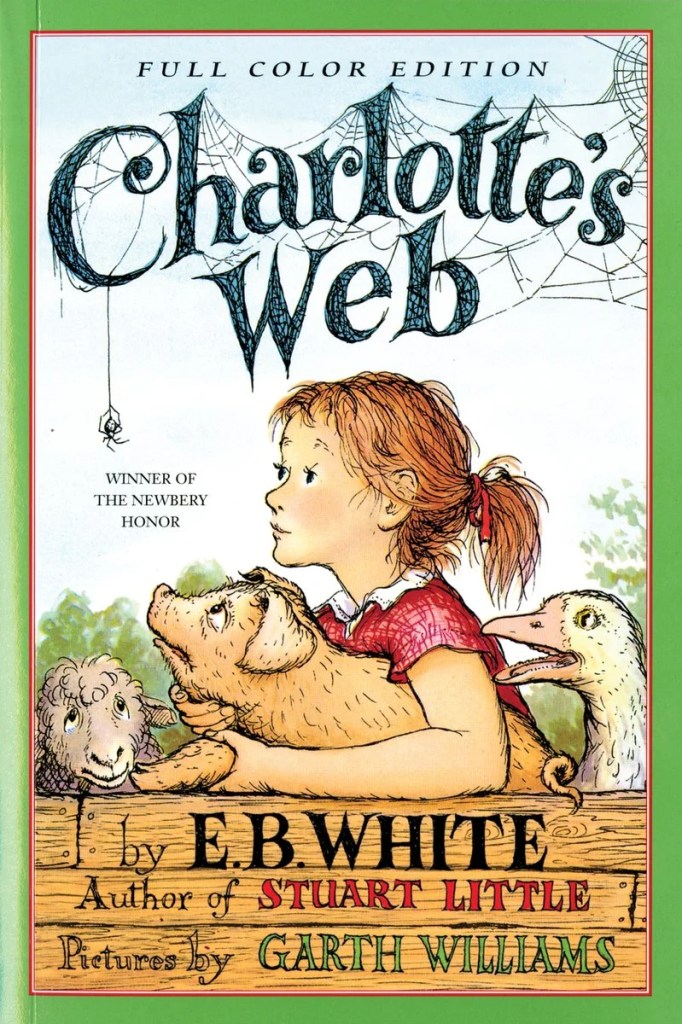
But I also carry Charlotte’s Web with me. E.B. White conveyed such tender emotions through his animal characters, and it is an unforgettable story about friendship, kindness, and loyalty. Those are the themes I keep coming back to myself.
Lastly, in honor of Roxie in Color, what is one talent or aspect of yourself that you are especially proud of sharing with the world?
SC: Up until I started my current job directing a state government agency, I competed in adult figure skating. I love the power and speed, and hope to be able to take it up again… probably when I retire!
DD: Like Roxie and her mom, I love to bake. For Father’s Day a few years ago, I gave my dad a lifetime supply of his favorite chocolate-chocolate chip cookies. I also spent many years doing needlepoint; after long days of working with words, it was relaxing to focus only on colors. However, I now spend much more of my downtime reading!
About Stacy Cervenka
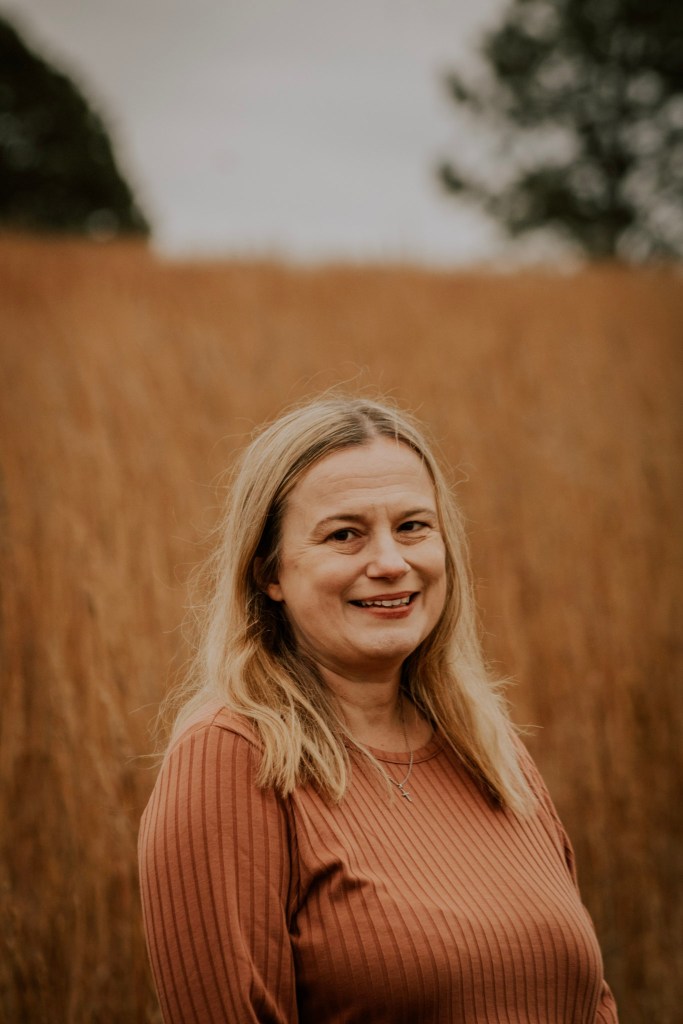
Stacy Cervenka is the Director of the Iowa Department for the Blind and previously led the Blind Parents Group of the National Federation of the Blind. She has spent her career working at the intersection of public policy, blindness rehabilitation, and disability civil rights.
Her professional background includes five years as a Legislative Assistant to U.S. Senator Sam Brownback, serving as Youth Programs Coordinator at the Sacramento Society for the Blind, and holding roles at the California Department of Rehabilitation as a Government Program Analyst and later as Executive Officer for the California State Rehabilitation Council. She has also served as Director of Public Policy for the American Foundation for the Blind and as Senior Director of Policy for RespectAbility, a national cross-disability rights organization. She holds a Master’s Degree in Rehabilitation Counseling.
Stacy divides her time between Des Moines, Iowa, and Lincoln, Nebraska, where she lives with her husband and two children. Like the family in Roxie In Color, Stacy and her husband, Greg, are blind, while their children, Leo and Josephine, are sighted.
About Diane Debrovner
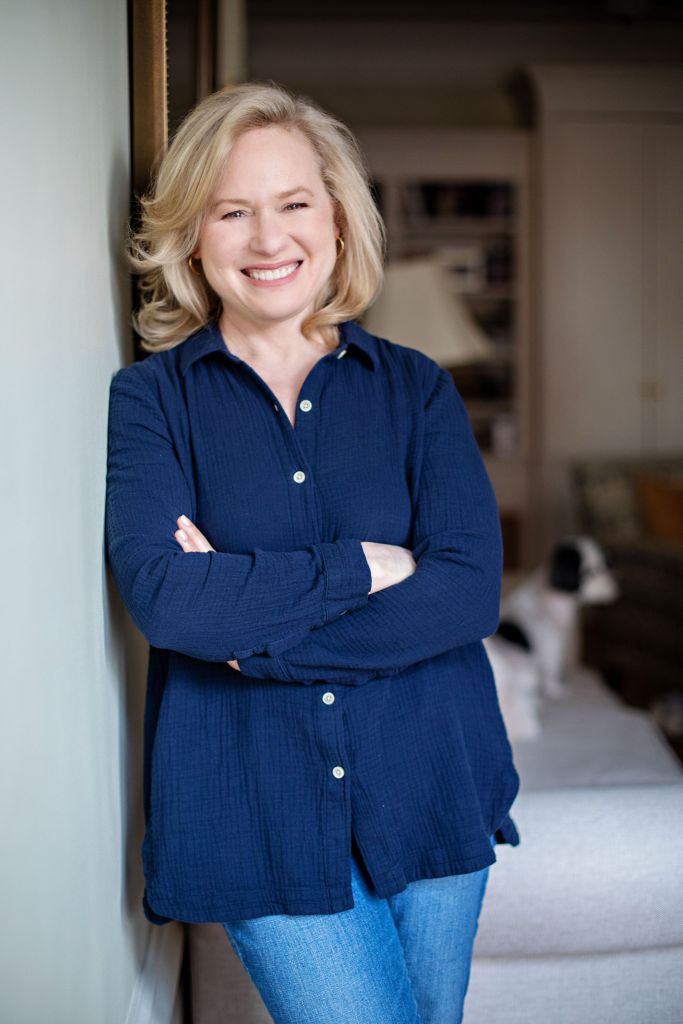
Diane Debrovner is the former deputy editor of Parents Magazine and author of the article “What Blind Parents Want You to See,” which provided the spark for Roxie in Color. She draws from years of experience covering child development, health, education, and books. Her work has been featured on TODAY, Good Morning America, and CNN, and she’s hosted podcasts and panels on parenting and family life.
She now helps nonprofits tell their stories to raise the funding they need—including the only music school in the country focused on teaching students of all ages with vision loss. Diane lives in New York City with her family and a dog who loves watermelon.
A huge thank you to Stacy and Diane for taking the time to talk about their book with us! Visit Stacy at her website StacyCervenka.com, and Diane at her website DianeDebrovner.com! Lastly, be sure to check out Roxie in Color, available on bookshelves everywhere June 2nd!

