
With the arrival of a new baby, families always face big changes; some exciting, some exhausting, and some surprising! There are new routines to adjust to, new discoveries and bonds to be made, and new memories to form as the family grows. And this time of adjustment can be especially difficult to navigate for those experiencing PPD, or postpartum depression, something that affects 1 in 10 postnatal parents in the U.S.
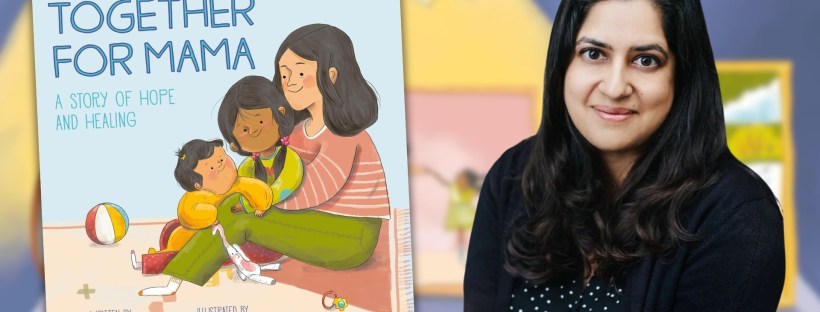
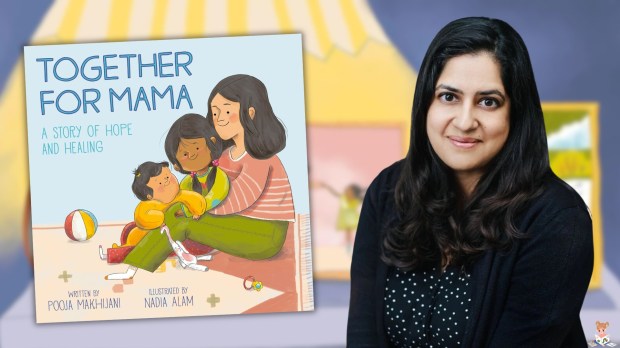
Together for Mama: A Story of Hope and Healing, the newest picture book by author Pooja Makhijani, explores the experience of PPD in a postnatal mother and her family from the perspective of Asha, the baby’s new big sibling. We recently had a chance to speak with Pooja about Together for Mama, addressing mental health challenges with young readers, and how to help create safe spaces for healing postpartum.
Welcome to The Baby Bookworm, Pooja! Can you introduce our readers to Asha and what is going on in her family at the beginning of Together for Mama?

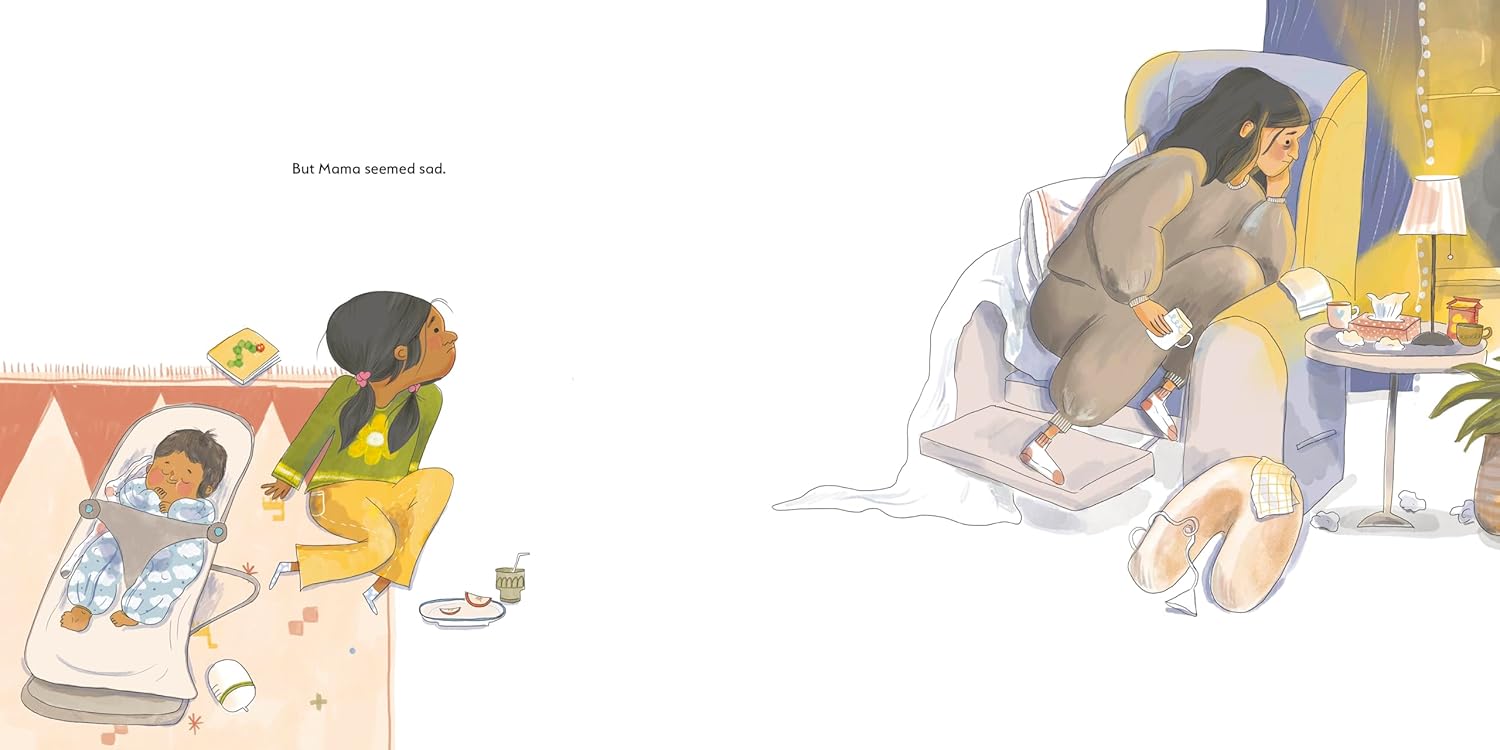
PM: At the beginning of this story, as her new sister comes home, Asha is overjoyed. She is excited to be a big sister, and she believes she will be the best big sister ever. Quickly, she realizes that her mother is not as happy as she is, and she is very confused and hurt as to why.
Postpartum depression is a common condition that has only recently been openly discussed in adults. What made you want to address the subject with young readers through this book?
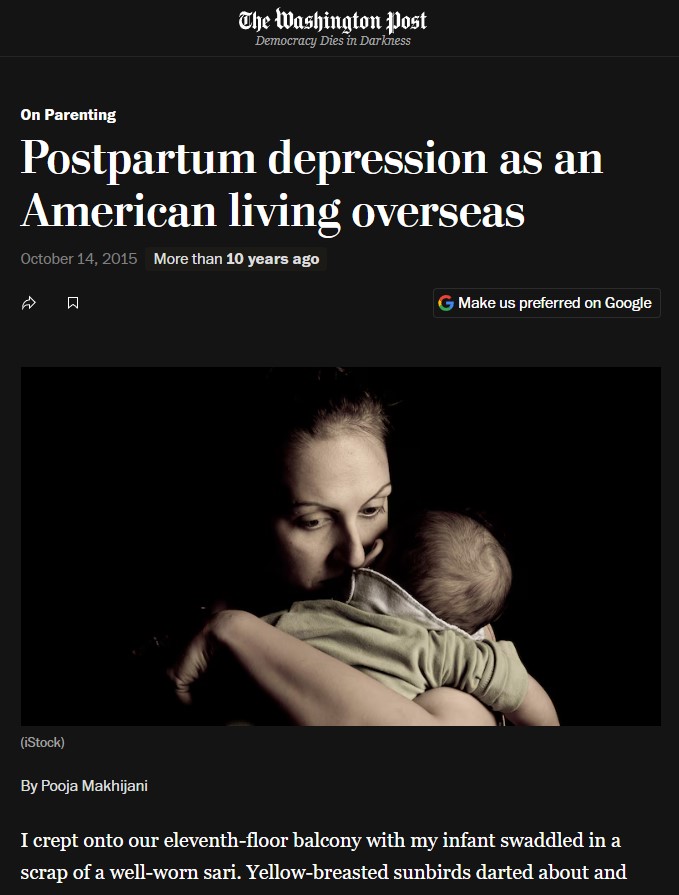
PM: Like many artists, I have obsessions, and I return to those subjects over and over in different ways. Together For Mama is drawn from my own experiences as a new parent, which I detailed in essay format in The Washington Post in 2015.
It is also informed by my extensive reporting on parenting, mental health, and the “fourth trimester” for The New York Times, Bon Appetit, Buzzfeed, Pacific Standard, and elsewhere—all written in service of destigmatizing maternal mental illness. Together for Mama, about one family who experiences the hardship of postpartum depression, is an extension of this body of work.
When caregivers are going through mental health challenges, their kiddos can feel powerless to help. What was your approach to exploring and affirming those feelings with readers?
PM: I strove to be compassionate, empathetic, and developmentally appropriate. I tried to name Asha’s feelings clearly and provided her with small, meaningful forms of agency. “Does this reassure the child without alarming them or asking them to carry the adult’s burden?” was a touchstone question I asked myself throughout the creative process.
I also looked to published works (mentor texts) for guidance and affirmation: The Whole Story of Half a Girl by Veera Hiranandani, about a mixed-race sixth-grade whose father is diagnosed with clinical depression; The Science of Breakable Things by Tae Keller, about a 12-year-old girl who tries to “fix” her mother’s depression by winning an egg drop competition; and Always Sisters by Saira Mir, a picture book about the related topic of pregnancy loss; among others.
And I enlisted sensitivity readers for factual feedback, including a psychotherapist, an OB/GYN, and a friend who specifically experienced postpartum depression with her second child and not her first.
People often think of PPD as a short-term condition, yet Asha’s baby sibling is a toddler by the time her Mama confesses to feeling better. What made you want to give Asha’s mother an extended recovery period?
PM: Again, this was informed by my own experiences: my PPD didn’t fade in a few months; it lingered for years. In the last decade or so, new research findings contradict the longstanding and widely held view that symptoms begin only within a few weeks after childbirth and last for a short period of time.
Recent studies show that the range of disorders women face is wider than previously thought (depression, anxiety, bipolar disorder, obsessive-compulsive disorder) and that predicting who might develop these illnesses, and for how long, is difficult. Together For Mama intentionally aims to complicate our popular understandings of perinatal mental health.

Because of the way the postnatal period is glamorized by entertainment and social media, parents experiencing PPD can feel ashamed to seek help with diagnosis, treatment, or even the type of everyday assistance shown in Together for Mama. What would you say to parents who might be wrestling with this type of shame or guilt?
PM: The first step is to realize that the pressures to effortlessly manage caretaking and work life or to “bounce back” to a pre-pregnancy body—and to do so without the help of a proverbial village—are incredibly damaging societal constructs.
The postpartum period is contradictory, vulnerable, and messy, and the more we acknowledge that and speak to that, the easier it is for new parents and their families to get the help they need.
Similarly, what advice would you give to someone who wants to help a loved one experiencing PPD?

PM: Speak with them candidly and transparently about your own postpartum experiences. My recovery made a turn once I was reassured that I wasn’t the “only one.” Feeling despair or rage or anxiety or nothing at all after the birth of a child is normal, and not something to be ashamed of.
More practically: make grocery runs, cook dinner, do laundry. Child-rearing is a collective responsibility; we shouldn’t let that burden fall on one or two people.
While the subject of PPD isn’t inherently cultural, there are many elements in Together for Mama that represent the central family’s South Asian heritage. As a creator, why do you think it is important that Asian families are represented in universal stories?
PM: We know that BIPOC parents often face a host of unique stigmas and barriers when it comes to assessing and treating postpartum mood disorders. The documented prevalence of postpartum depression is lower among Asian Americans, probably due to underreporting, underdiagnosis (lack of screening), or underutilization of mental health care due to intense cultural stigma, than non-white Hispanics, not because it is actually any less prevalent!

It was important for me to provide a compassionate, fully nonjudgmental portrait of loving and supportive care in a very specific cultural context to counter these stigmas. Also, James Joyce’s words in Dubliners—“In the particular is contained the universal”—deeply inform all my work. A story that is concrete and precise and grounded in a place and time resonates far beyond.
In addition to being a children’s author, you have an incredibly prolific career as a journalist and essayist on many subjects. Does one style of writing ever inform or inspire the other, and how so?
PM: Not so much the style as the subject matter. Bread Is Love was informed and inspired by essays I wrote about breadbaking and mental health; recipes I developed for King Arthur Baking Company and Eating Well; and captions I wrote for my personal social media.

Together For Mama, as I said, also drew from work published in other genres and media. I keep revisiting subjects on the page to find new ways of seeing for myself and others.
One question I love to ask children’s authors is which books inspired them when they were young readers themselves. Are there any books or series that influenced you when you were a child?
PM: I loved the Ramona books, the Nancy Drew mysteries, the early American Girl series (Kirsten, Samantha, Molly), and the Baby-Sitters Club series. Those books taught me about character and plot, girlhood and friendship, and I return to them as an adult when I need familiarity, comfort, and joy.
Lastly, in honor of Together for Mama, what does a mental self-care day look like for you?
PM: A romance novel; a long walk; and a loaf of bread, just out of the oven.
About Pooja Makhijani
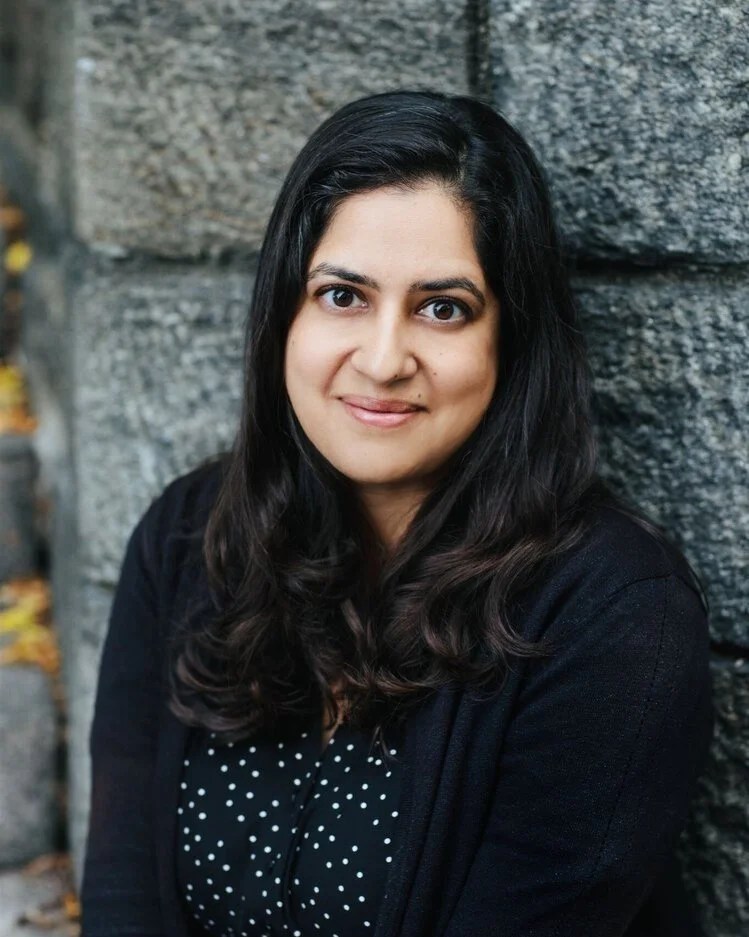
Pooja Makhijani is the author of Mama’s Saris, Bread Is Love, Together For Mama, and Aunties (2027). Her bylines have appeared in The New York Times, The Washington Post, NPR, Real Simple, The Atlantic, WSJ.com, The Cut, Teen Vogue, Publishers Weekly, ELLE, and Bon Appétit, among others. She is a 2026 New Jersey State Council on the Arts Individual Artist Fellow.
A warm thank you to Pooja for taking the time to talk about her work with us! Visit her on her website at PoojaMakhijani.com! Lastly, be sure to check out Together For Mama: A Story of Hope and Healing available on bookshelves everywhere June 23rd!

